
|
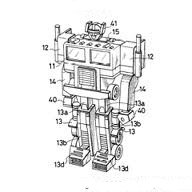
PatentsA patent is a right, conferred by the federal government, that grants to its owner a legally enforceable right to exclude others from practicing the invention described and claimed in the document. There are different types of patents but the most common is the Utility patent. Utility patents are awarded to inventors for inventions that are useful, novel, not obvious, and meet all of the procedural requirements described in the United States Patent and Trademark Office (USPTO) 's 3,000+ page Manual of Patent Examining Procedure. Yet, in spite of the hurdles in obtaining a patent, it remains as a powerful sword to go after those who infringe on your patent, a comforting shield to protect you when others claim you are infringing on their patents, and a magnet to attract investors who can help you take your business to the next level. As a USPTO registered attorney, I can help you clear those hurdles that lie between you and that red ribbon parchment that tells the world you are a credible player in marketplace.
|

|
TrademarksWhen the public has learned to associate a mark with a source or standard of quality of a product or service that mark may be protected from duplication by others so that the public does not become confused. The mark becomes a visible representation of the provider's goodwill and is an important asset to a business. We all know how skeptical the public can be about a new product or service and after you have worked hard to convince them of the value of your product or service the marks associated with your business become an important asset of your business that is every bit as important as a warehouse full of goods. As a USPTO registered attorney, I can work with you in protecting those marks from competitors who want to make money using your public goodwill.
Click here to see my flat fees for trademark filing and view FAQs on trademarks. |

|
CopyrightsThe purpose of copyright law is to promote the creation of works of art, music, and writings in order to benefit the public. Copyright protections attach automatically to the work as soon as it is created but it is wise to register your work with the U.S. Copyright office. However, the protections offered by a copyright are not as strong as those granted to a patent. In a copyright, only the work's expressions are protected, the ideas contained in the work are not. The work you wish to copyright has to be substantial but a different test for substantial is used depending upon the work. The work also has to be "fixed", this is in a form that others can replicate, and not have any utility for which you need a patent. As a result, it is not always clear what "works" you can include in your intellectual property portfolio. Let me help you by combing through your creative works and making sure they are copyrighted and included in your intellectual property portfolio to maximize the value of your business.
|

|
Trade SecretsUnlike other intellectual property, state law governs trade secrets. Under these laws, a trade secret is information that derives economic value from not being known to the public or to persons who can obtain economic value from it and the owner of the trade secret has taken reasonable efforts to maintain its secrecy. A trade secret is a fairly powerful form of intellectual property. Unlike patents, it lasts as long as you can maintain its secrecy, you are not required to disclose it to the public, and you do not file it with any government agency. However, once it has been revealed to the public it is no longer a secret and you may only seek recovery from those who stole the secret. Perhaps, the most famous trade secret is the formula for Coca Cola. More common forms of trade secrets include customer lists, formulas or process for the manufacture of products, business practices, and much more. All businesses have information that give them a competitive edge over others. I can work with you to review this information and determine (i) if it is a trade secret, (ii) what business practices need to be implemented so it becomes a trade secret, and (iii) add that trade secret to your portfolio of intellectual property and increase the value of your business.
|